
Infertility is a common challenge faced by many couples who dream of starting a family. Thanks to advancements in reproductive medicine, treatments like intrauterine insemination (IUI) and in vitro fertilization (IVF) offer hope to couples struggling to conceive naturally. However, many people feel confused about which treatment is more suitable for their situation. Both IUI and IVF are assisted reproductive techniques designed to help couples achieve pregnancy, but they differ significantly in terms of procedure, cost, success rate, and complexity. Understanding these differences can help couples make an informed decision with the guidance of a fertility treatment specialist. In this article, we will explore what IUI and IVF treatments involve, how they work, their advantages, and which treatment might be right for you.
Understanding Fertility Challenges
Before choosing a fertility treatment, it is important to understand why pregnancy may not be happening naturally. Infertility can occur due to several reasons, including hormonal imbalances, ovulation problems, blocked fallopian tubes, low sperm count, age-related fertility decline, or unexplained infertility. Doctors usually recommend fertility treatments after a couple has been trying to conceive for one year without success (or six months if the woman is above 35 years of age). The choice between IUI and IVF depends on the underlying cause of infertility, the age of the woman, and the couple’s medical history.
What Is IUI (Intrauterine Insemination)?
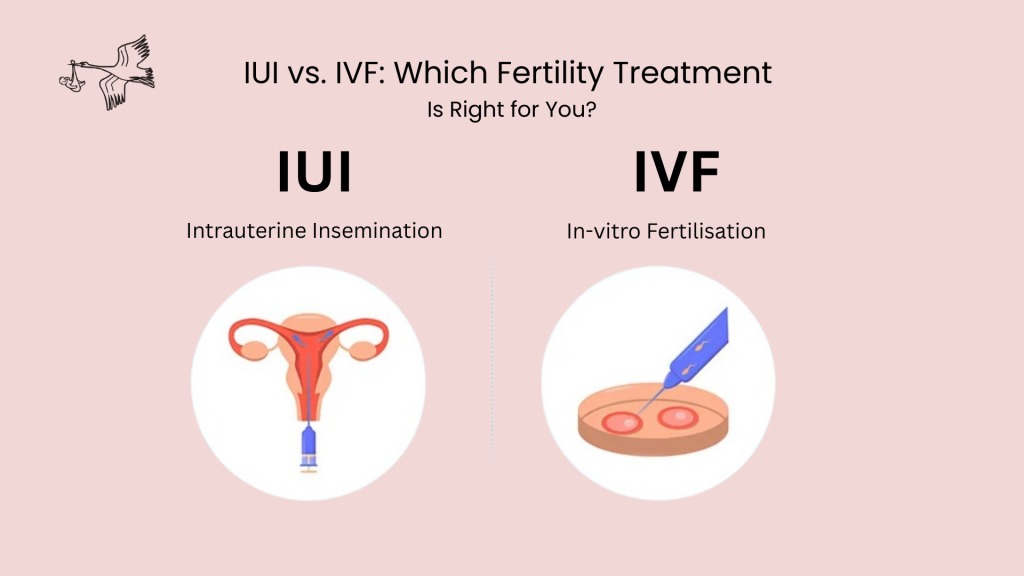
IUI, or intrauterine insemination, is a relatively simple fertility treatment where specially prepared sperm is directly placed into the uterus during the time of ovulation. This procedure increases the number of sperm that reach the egg, thereby improving the chances of fertilization. During an IUI cycle, the woman may be given medications to stimulate ovulation. Once the ovary releases an egg, the sperm sample is processed in a laboratory to select the healthiest and most active sperm cells. These sperm are then inserted into the uterus using a thin catheter. The entire procedure is quick, painless, and usually completed within a few minutes. Since fertilization occurs naturally inside the body, IUI is considered the least invasive form of assisted reproduction.
Doctors commonly recommend IUI in cases such as
- Mild male infertility (low sperm count or motility)
- Cervical mucus problems
- Ovulation disorders
- Unexplained infertility
- Couples using donor sperm
What Is IVF (In Vitro Fertilization)?
IVF, or in vitro fertilization, is one of the most advanced and effective fertility treatments at Disha Fertility. Unlike IUI, fertilization takes place outside the body in a laboratory. The IVF process involves several steps. First, the woman receives hormone injections to stimulate the ovaries so they produce multiple eggs. These eggs are then retrieved through a minor surgical procedure. The eggs are combined with sperm in a laboratory where fertilization occurs. Once embryos develop, the healthiest embryo is selected and transferred into the uterus. If implantation occurs successfully, pregnancy begins.
IVF is recommended in more complex fertility cases such as:
- Blocked or damaged fallopian tubes
- Severe male infertility
- Endometriosis
- Failed IUI cycles
- Genetic disorders
- Age-related infertility
- Unexplained infertility lasting many years
Key Differences Between IUI and IVF
Although both treatments aim to help couples achieve pregnancy, the approach and success rates vary significantly.
1. Procedure Complexity
IUI is a simple outpatient procedure that requires minimal medical intervention. IVF, on the other hand, involves multiple steps, including hormone injections, egg retrieval, fertilization in the lab, and embryo transfer.
2. Cost
IUI is much more affordable compared to IVF. Many couples choose IUI as their first treatment option because it is less expensive and less invasive. IVF requires advanced laboratory procedures, making it significantly more costly.
3. Success Rates
The success rate of IVF is generally higher than IUI. While IUI may work well for mild fertility issues, IVF offers better chances for couples with severe infertility problems.
4. Time Required
IUI cycles are shorter and require fewer clinic visits. IVF cycles involve more monitoring, medications, and procedures.
5. Medical Conditions Treated
IUI works best for mild infertility cases. IVF is recommended for more complex reproductive challenges such as blocked tubes or severe male infertility.
When Is IUI the Right Choice?
IUI may be the right fertility treatment if the couple is facing relatively mild fertility issues. Doctors often suggest trying IUI first before moving to more advanced treatments.
This option is suitable for couples when:
- The woman has healthy fallopian tubes
- Ovulation occurs regularly
- Male fertility problems are mild
- Infertility is unexplained
- The couple prefers a less invasive treatment
Since IUI is simpler and more affordable, many fertility specialists recommend trying 2–3 cycles of IUI before considering IVF.
When Is IVF the Better Option?
IVF becomes the preferred treatment when other methods have failed or when fertility issues are more complex.
Doctors usually recommend IVF when:
- The fallopian tubes are blocked or damaged
- The male partner has very low sperm count
- The woman has severe endometriosis
- The couple has experienced multiple failed IUI cycles
- The woman is over 35, and fertility is declining
- Genetic testing of embryos is required
IVF also offers additional technologies such as ICSI (Intracytoplasmic Sperm Injection), where a single sperm is directly injected into the egg, increasing the chances of fertilization in severe male infertility cases.
Emotional and Physical Considerations
Choosing between IUI and IVF is not just a medical decision—it can also be emotionally challenging for couples. Fertility treatments require patience, emotional support, and financial planning. IUI tends to cause less physical and emotional stress because it is simpler and involves fewer medications. IVF, while more effective, can be physically demanding due to hormone injections, frequent monitoring, and procedures. Couples should discuss all aspects with their fertility doctor, including success rates, costs, possible risks, and emotional readiness before making a decision.
Success Rates and Age Factor
Age plays a crucial role in fertility treatments. Younger women generally have higher success rates with both IUI and IVF. For women under 35, several cycles of IUI treatment are a good chance for pregnancy. However, for women above 35 or those with serious fertility issues, IVF may offer better results in a shorter time frame. Many fertility specialists recommend not delaying advanced treatments if age-related fertility decline is a concern.
Conclusion
Both IUI and IVF are effective fertility treatments that have helped millions of couples achieve their dream of parenthood. The right treatment depends on several factors, including the cause of infertility, age, medical history, and personal preferences. IUI is usually the first step in fertility treatment because it is simple, affordable, and less invasive. However, IVF treatment has higher success rates and is often the best solution for complex fertility problems. The most important step is consulting an experienced fertility specialist who can evaluate your condition and recommend the treatment that offers the best chance of success. With the right medical guidance, patience, and emotional support, many couples can successfully overcome fertility challenges and welcome a healthy baby into their lives.
Frequently Asked Questions (FAQs)
1. What is the main difference between IUI and IVF?
Ans. The main difference is where fertilization occurs. In IUI, sperm is placed inside the uterus, and fertilization happens naturally inside the body. In IVF, fertilization occurs in a laboratory before the embryo is transferred to the uterus.
2. Which treatment has a higher success rate?
Ans. IVF generally has a higher success rate compared to IUI, especially in cases of severe infertility or advanced maternal age.
3. How many IUI cycles should be tried before IVF?
Ans. Most doctors recommend trying 3–4 IUI cycles before considering IVF, depending on the couple’s medical condition and age.
4. Is IVF painful?
Ans. IVF procedures are usually performed with anesthesia or minimal discomfort. However, hormone injections and monitoring may cause mild side effects.
5. Is IUI cheaper than IVF?
Ans. Yes, IUI is significantly more affordable than IVF because it involves fewer medical procedures and laboratory processes.
6. Can IVF guarantee pregnancy?
Ans. No fertility treatment can guarantee pregnancy. However, IVF offers higher success rates compared to other assisted reproductive techniques.