In the last few years, numerous women have decided to postpone having children due to their professional ambitions, financial readiness, personal goals, or waiting for suitable life situations. Although advancements in medical science have greatly enhanced reproductive health services, age still stands out as a crucial element affecting a woman’s capacity to conceive. Female fertility undergoes natural transformations with advancing age because a woman’s reproductive system experiences gradual biological and hormonal changes over time. After turning 30, many women may start to observe subtle shifts in their reproductive wellness, even if their overall health is good. Grasping how age influences female fertility is vital for women who are making plans regarding family and wish to take informed actions concerning their reproductive prospects.
Understanding Female Fertility and the Biological Clock
To comprehend the effect of age on reproduction, it is crucial to first grasp the mechanics of female fertility. In contrast to men, who generate sperm throughout their lifetime, women have a predetermined quantity of eggs present in their ovaries from birth. An infant girl is born with approximately one to two million eggs, but this count gradually diminishes as she matures. By the time she reaches puberty, the figure declines to around 300,000 eggs, and only a fraction of these will develop and be released during ovulation throughout her childbearing years. This inherent reduction in the egg count, coupled with gradual alterations in egg quality, significantly impacts female fertility over time. As women age, their ovaries become less reactive to hormonal messages, which can lead to less predictable ovulation and diminish the likelihood of natural conception.
Female Fertility in the Early 30s
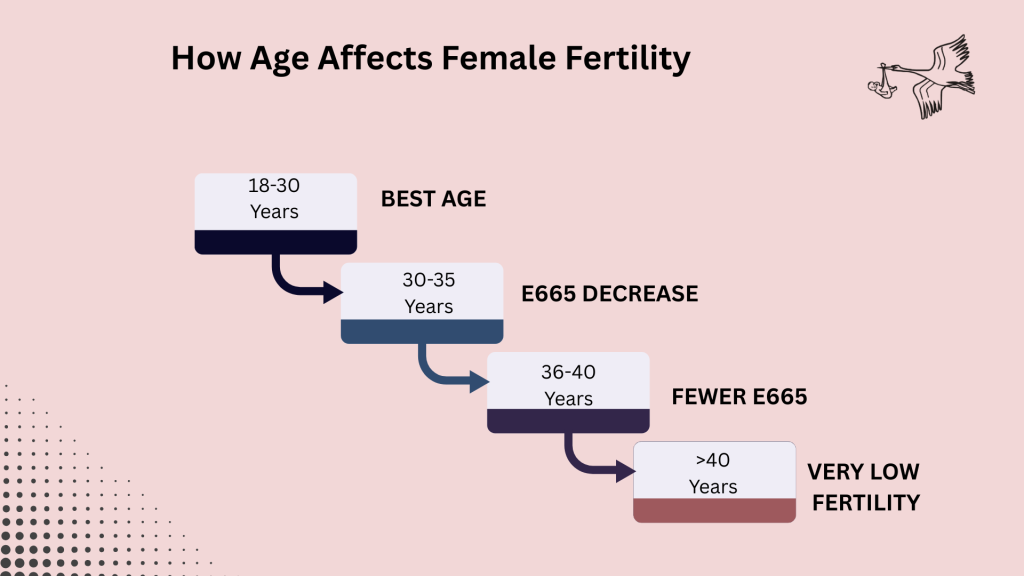
For a vast number of women, the early thirties are still a time when achieving pregnancy is highly feasible and relatively prevalent. Nonetheless, biological alterations commence slowly during this phase. Generally, female fertility begins to diminish gradually after reaching 30 years of age, although this reduction is usually slight in the early thirties. Numerous women are still able to conceive naturally during this period, but it may require a bit more time than it would in their twenties. The body continues to generate healthy eggs, but the ovarian reserve, or the number of remaining eggs in the ovaries, keeps declining. Medical professionals often indicate that while the decrease in female fertility at this stage is not abrupt, it marks the start of a natural progression that advances as a woman nears her mid-thirties and beyond.
Decline in Egg Quantity and Quality
A significant factor contributing to the gradual decrease in female fertility after turning 30 is the loss in both the number and health of eggs. With the passage of time, the ovaries hold a smaller quantity of eggs that are capable of being fertilized. Moreover, the surviving eggs may not be as viable as those found in younger individuals. The health of eggs is essential for successful fertilization and the proper development of embryos. As women age, there is an increased likelihood of eggs having chromosomal defects, which can hinder embryo development or elevate the chances of miscarriage. Due to these alterations, female fertility steadily declines with age, rendering natural conception slightly more difficult.
Hormonal Changes and Ovulation
The balance of hormones is crucial for reproductive health, and variations in hormone levels can impact female fertility as women age. Hormones like estrogen, progesterone, and follicle-stimulating hormone (FSH) are responsible for the regulation of the menstrual cycle and ovulation. Post-30, the body’s hormonal balance may gradually alter, resulting in less predictable ovulation cycles. Some women might experience shorter or irregular menstrual cycles, complicating the identification of the fertile period. These hormonal changes are a typical aspect of the aging process, yet they can affect female fertility by altering the timing and quality of ovulation.
Female Fertility After Age 35
Reaching the age of 35 is often viewed as a significant turning point in reproductive health because the decline in fertility becomes increasingly apparent thereafter. Although many women can still conceive naturally in their mid-thirties, the likelihood of pregnancy starts to diminish more swiftly than in younger years. The reserve of viable eggs reduces more quickly, and there can be a notable drop in egg quality. Women over the age of 35 may also experience a slightly increased risk of miscarriage or chromosomal issues during pregnancy. Due to these reasons, healthcare professionals frequently advise women in this age bracket to consult medical experts if they have been attempting to conceive for six months without success. Regular assessments of female fertility through medical tests can aid in early detection of potential issues.
Lifestyle Factors That Influence Female Fertility
While age remains the primary determinant of reproductive capabilities, lifestyle choices significantly influence female fertility as well. Engaging in healthy practices, such as eating a nutritious diet, exercising consistently, and managing stress effectively, can have a positive impact on reproductive health. Unhealthy lifestyle choices, including smoking, drinking excessively, insufficient sleep, and obesity, can hasten the decline in female fertility. Foods rich in essential nutrients, adequate hydration, and maintaining a healthy body weight can help uphold hormone balance and enhance overall reproductive health. Although changes in lifestyle may not fully prevent age-related declines, they can aid in safeguarding female fertility and enhancing the likelihood of conception.
Medical Conditions and Female Fertility
Besides age and lifestyle choices, various health issues can influence female fertility. Conditions like polycystic ovary syndrome (PCOS), endometriosis, thyroid dysfunctions, and hormonal irregularities can disrupt ovulation as well as reproductive wellness. These medical issues might become more prevalent as women age and can further reduce the likelihood of conception. Timely identification and appropriate management can greatly enhance fertility for those affected by these health concerns. Routine gynecological examinations and fertility assessments are beneficial in identifying possible problems and enabling healthcare providers to suggest suitable IVF treatments.
Fertility Preservation Options
As awareness surrounding reproductive health rises, numerous women are investigating fertility preservation methods to secure their future opportunities for becoming pregnant. One option available is egg freezing, which enables women to store viable eggs at a younger age for later use. This method has gained traction among women who intend to postpone having children while still wishing to improve their prospects for conception in the future. Fertility preservation advancements have become a crucial resource in enhancing female fertility, especially for those who may not feel prepared to start a family in their early thirties.
Conclusion
Age significantly impacts reproductive wellness, making it essential for women to comprehend its influence on female fertility as they plan their families. Though conceiving is still feasible after turning 30, natural fertility tends to decline gradually due to variations in egg count, egg quality, and hormonal stability. Being informed about these developments empowers women to make educated choices regarding their reproductive health and seek medical advice when appropriate. By adopting a healthy lifestyle, keeping track of reproductive wellness, and considering contemporary fertility options when required, many women can effectively navigate their fertility and fulfill their aspirations of parenthood later in life.
Frequently Asked Questions (FAQs)
1. Does female fertility decrease after the age of 30?
Yes, female fertility begins to decline gradually after 30 due to changes in egg quantity and quality.
2. At what age does female fertility decline significantly?
While the decline starts after 30, female fertility decreases more rapidly after the age of 35.
3. Can a woman conceive naturally after 35?
Yes, many women conceive naturally after 35, although female fertility may be lower compared to younger ages.
4. What factors affect female fertility besides age?
Lifestyle habits, medical conditions, hormonal balance, and overall health can all influence female fertility.
5. Can fertility treatments help women after 35?
Yes, treatments like IUI and IVF can help improve pregnancy chances when female fertility declines due to age.