
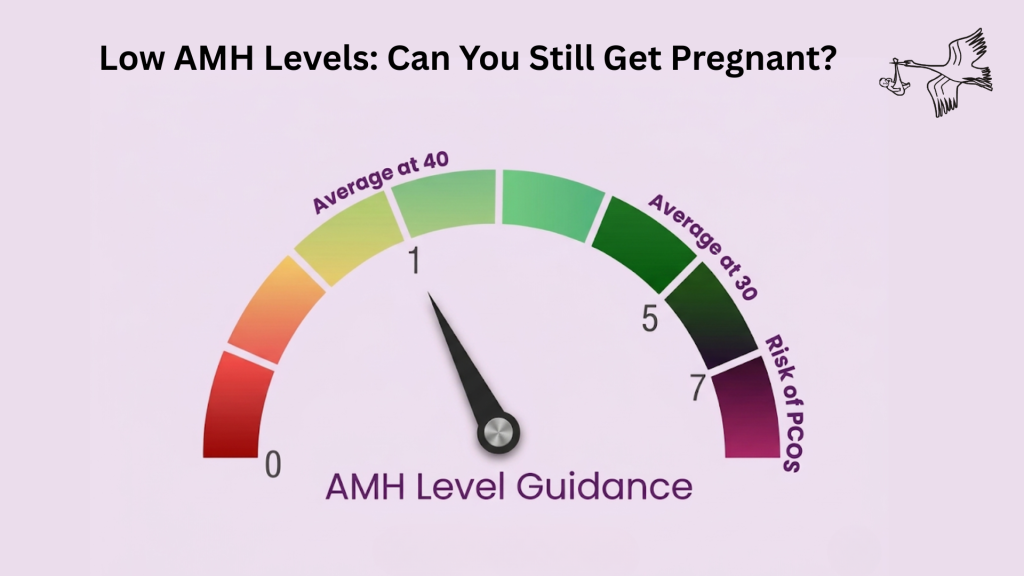
Anti-Müllerian Hormone (AMH) is an important marker used to assess a woman’s ovarian reserve, which refers to the number of eggs remaining in her ovaries. It is produced by small follicles in the ovaries and is often used by doctors to evaluate fertility potential. However, it is crucial to understand that AMH does not determine your ability to get pregnant on its own. Many women misunderstand low AMH as a direct indication of infertility, but in reality, it only reflects the quantity of eggs, not their quality or the ability of the body to conceive. A woman can still ovulate regularly and release healthy eggs even with low AMH levels, which means natural pregnancy is still very much possible.
What Does Low AMH Mean?
Low AMH levels generally indicate that the number of eggs in the ovaries is lower than expected for a woman’s age. This decline in ovarian reserve can be due to several factors such as increasing age, genetic predisposition, certain medical conditions, or previous ovarian surgeries. While this may reduce the number of opportunities for conception over time, it does not mean that pregnancy cannot occur. It simply means that fertility may decline sooner than expected, and therefore, timely planning becomes more important. Many women with low AMH continue to have regular menstrual cycles and ovulation, which are key factors in achieving pregnancy.
Can You Get Pregnant with Low AMH Naturally?
Yes, it is absolutely possible to get pregnant naturally even with low AMH levels. As long as ovulation is occurring and a healthy egg is released, conception can happen. The body does not need a large number of eggs in a single cycle—just one good-quality egg is enough for fertilization. Many women with low AMH conceive naturally without any medical intervention, especially if they are younger and have no other underlying fertility issues. While the chances may be slightly reduced due to fewer eggs, it is important to remain hopeful and focus on improving overall reproductive health.
The Difference Between Egg Quantity and Quality
One of the most important aspects to understand about low AMH is the difference between egg quantity and egg quality. AMH only gives information about how many eggs are left in the ovaries, not how healthy those eggs are. Egg quality is primarily influenced by age rather than AMH levels. This means that a younger woman with low AMH may still have high-quality eggs capable of leading to a healthy pregnancy. This distinction provides reassurance to many women who may feel discouraged after seeing a low AMH result.
Factors That Influence Pregnancy with Low AMH
Several factors influence the chances of pregnancy in women with low AMH, including age, overall health, ovulation regularity, and lifestyle habits. A healthy uterus, balanced hormones, and good general health all play an essential role in successful conception. External factors such as stress, diet, sleep, and physical activity can also significantly impact fertility. By focusing on these aspects, women can create a more favorable environment for pregnancy, even with a lower ovarian reserve.
Lifestyle Changes to Support Fertility
Adopting a healthy lifestyle can make a meaningful difference in improving fertility outcomes. A balanced diet rich in antioxidants, vitamins, and essential nutrients helps support egg freezing treatment. Including foods like leafy vegetables, fruits, nuts, seeds, whole grains, and lean proteins can enhance reproductive function. Regular exercise improves blood circulation and hormone regulation, while maintaining a healthy weight can support ovulation. Avoiding smoking, alcohol, and excessive caffeine is also important in preserving fertility. These changes may not increase AMH levels significantly, but they can improve the overall chances of conception.
Importance of Tracking Ovulation
For women with low AMH, tracking ovulation becomes especially important because the number of available eggs is limited. Identifying the fertile window ensures that the chances of conception are maximized during each cycle. Methods such as ovulation predictor kits, basal body temperature tracking, and monitoring cervical mucus changes can provide useful insights into ovulation patterns. Consistent tracking helps in better timing and increases the likelihood of natural pregnancy.
Medical Support and Treatment Options
If natural conception does not occur after a certain period of trying, medical support may be considered. Fertility specialists can evaluate hormone levels, ovarian reserve, and overall reproductive health to recommend suitable treatments. Options such as ovulation induction, intrauterine insemination (IUI), or in vitro fertilization (IVF) can improve the chances of pregnancy. In some cases, advanced techniques may be suggested depending on individual circumstances. Seeking medical advice early can help in making informed decisions and avoiding unnecessary delays.
Emotional Well-being and Staying Positive
Receiving a diagnosis of low AMH can be emotionally challenging and may lead to anxiety about fertility and future family planning. It is natural to feel overwhelmed, but maintaining a positive outlook is essential. Stress can negatively affect hormonal balance and ovulation, so focusing on emotional well-being is just as important as physical health. Engaging in relaxation techniques, seeking support from loved ones, and staying informed can help reduce anxiety and create a more supportive environment for conception.
Common Myths About Low AMH
There are many misconceptions surrounding low AMH that can create unnecessary fear. One common myth is that low AMH means immediate infertility, which is not true. Another misconception is that it indicates poor egg quality, whereas it only reflects the number of eggs. Some also believe that low AMH means menopause is near, but this is not always the case. Understanding the facts helps women approach their fertility journey with clarity and confidence rather than fear.
Conclusion
Low AMH levels may indicate a reduced ovarian reserve, but they do not define your ability to conceive. With proper awareness, timely planning, and a healthy lifestyle, many women can still achieve natural pregnancy. The key is to focus on overall reproductive health, track ovulation effectively, and seek medical advice when necessary. Every fertility journey is unique, and low AMH is just one part of a much bigger picture. With the right approach and a positive mindset, pregnancy is still very much possible.
Frequently Asked Questions (FAQs)
1. Can I get pregnant naturally with low AMH?
Yes, natural pregnancy is possible if ovulation is occurring and a healthy egg is released.
2. Does low AMH mean poor egg quality?
No, AMH indicates egg quantity, while egg quality mainly depends on age.
3. What is considered a low AMH level?
AMH levels below 1.0 ng/mL are generally considered low, depending on age.
4. Can lifestyle changes improve AMH levels?
Lifestyle changes may not significantly increase AMH but can improve overall fertility.
5. Is IVF necessary with low AMH?
Not always; many women conceive naturally, though IVF may help in some cases.
6. Does low AMH mean early menopause?
No, it does not necessarily indicate early menopause.